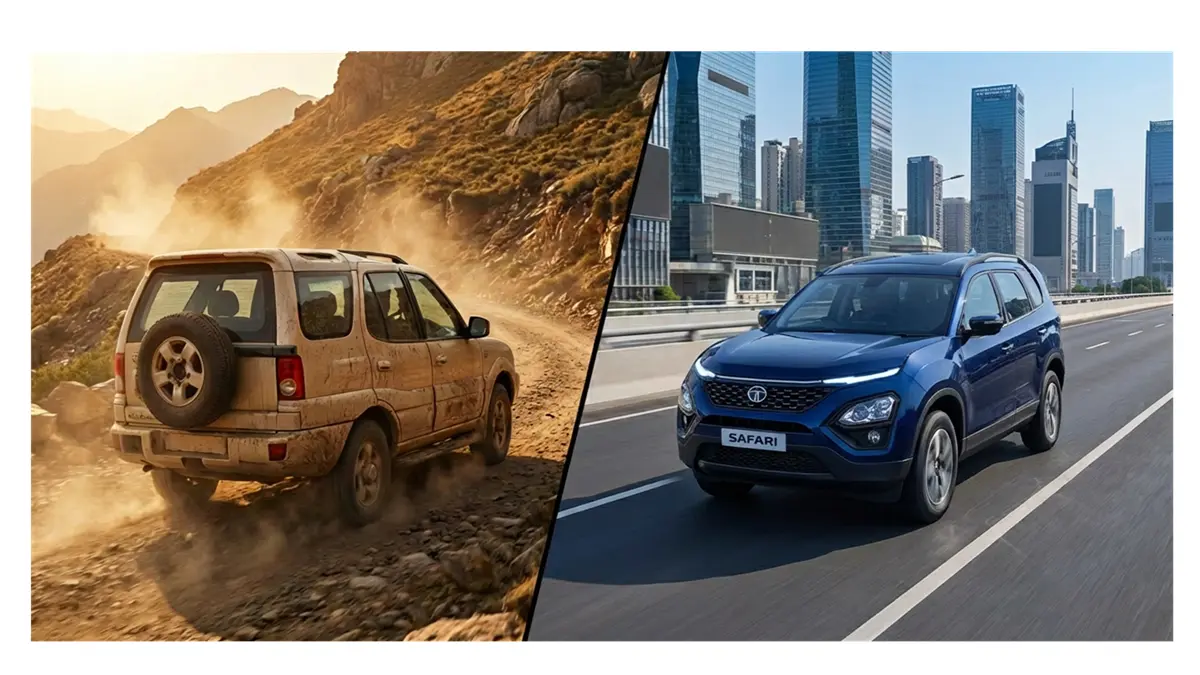
If you grew up in India during the 90s or 2000s, the name Tata Safari likely brings back memories of rugged adventures and the iconic tagline, “Reclaim Your Life”. It was the car that taught India to dream of SUVs.
But where does the legend stand today? From a hardcore 4×4 off-roader to a sophisticated family hauler, here is the complete story of how the Safari has evolved and what you need to know before buying one today.
1. The “OG” Era: A Rugged Icon
Launched in 1998, the original Safari was India’s first completely designed and manufactured SUV. It was famous for its commanding road presence and comfortable highway cruising. Over the years, we saw the Dicor (2005) and the Safari Storme (2012), which were built on a tough ladder-frame chassis with rear-wheel drive and proper 4×4 capabilities.

Why do fans miss it? Enthusiasts still swear by the old Safari’s “real SUV” vibe. Reddit users fondly remember its spare wheel on the tailgate and its ability to handle rough terrains that modern crossovers might struggle with. However, older models were plagued by issues like rust, electrical glitches, and suspension wear.
2. The Modern Avatar: Luxury Over Off-Roading
In 2021, Tata revived the brand with an all-new Safari. This version ditched the old ladder frame for the OMEGARC platform, derived from the legendary Land Rover D8 architecture.

Unlike its predecessor, the modern Safari is a front-wheel-drive monocoque SUV. While hardcore fans complain about the lack of 4WD, Tata explains that the demand for 4×4 is less than 2%, making it expensive to include. Instead, the focus has shifted to urban comfort, luxury, and safety.
3. 2024 Facelift: The Tech Upgrade You Wanted
The latest 2024 Safari update has taken things up a notch, especially in safety and technology.

- Safety First: The Safari has secured a 5-star Global NCAP rating for both adult and child protection. Top variants now come with 7 airbags, including a driver knee airbag.
- ADAS Features: It now boasts advanced driver assistance systems like Lane Keeping Assist, Adaptive Cruise Control, and Traffic Sign Recognition, making highway driving much safer.
- New Look: Tata has introduced fresh colours like Stardust Ash and Galactic Sapphire to keep the lineup exciting.
4. Safari vs. The Competition (XUV700)
The biggest question for buyers is often: Safari or Mahindra XUV700? Based on owner experiences, here is the breakdown:
- Where Safari Wins: Owners report that the Safari offers better ride quality and feels more “robust” on bad roads compared to the XUV700. The JBL sound system is also praised for having more punch at lower volumes.
- Where XUV700 Wins: The Mahindra counterpart is often seen as more “tech-heavy” with smoother electronics and a petrol engine option, which the Safari currently lacks.
- The Drive: The Safari’s diesel engine feels punchy and well-tuned, with owners noting that the NVH (Noise, Vibration, Harshness) levels feel more expensive than the competition.
5. What Does the Future Hold?
If you are holding out for something different, Tata has big plans:

- Tata Safari EV: Expected to launch around 2025-2026, the electric Safari could offer a range of up to 500 km and might finally bring back AWD capabilities.
- Petrol Engine: A 1.5-litre turbo-petrol engine is reportedly in the works to meet the demand for petrol SUVs.
The Verdict
The Tata Safari has successfully transformed from a rough-and-tough off-roader into a premium, safe, and feature-loaded family SUV. While it may have lost the 4×4 gear, it has gained the comfort and technology that modern families demand.
Dhanush, an automobile expert with over 5 years of experience in the latest auto news and updates. Your go-to source for every development in the world of cars and bikes

Dhanush, an automobile expert with over 5 years of experience in the latest auto news and updates. Your go-to source for every development in the world of cars and bikes