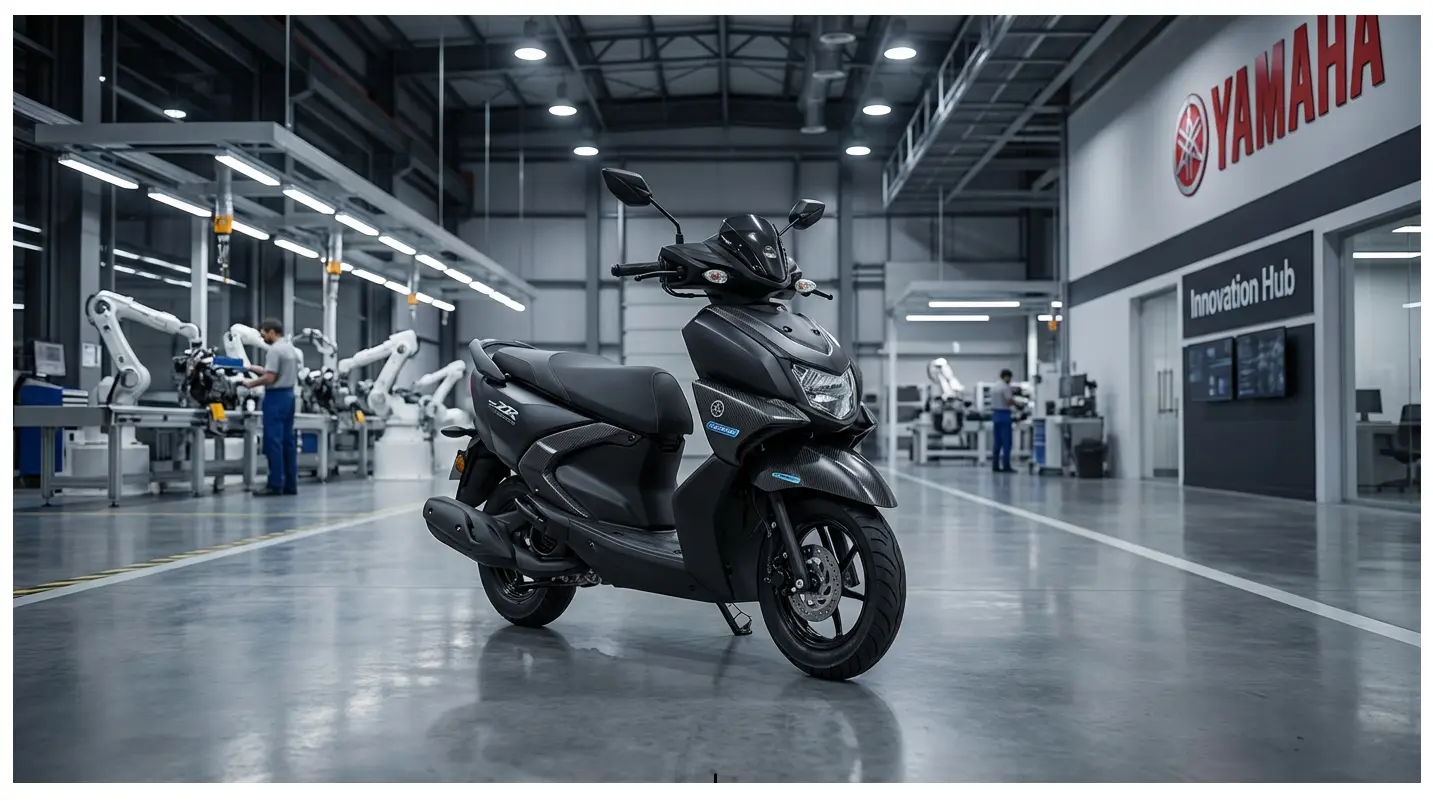
Are you a college student or a young professional looking for a ride that turns heads? The Yamaha Ray ZR 125 Fi Hybrid promises style, speed, and technology. But is it really a “Hybrid” or just a marketing gimmick? And does the plastic body actually last?
Let’s break it down—simple, honest, and direct.
1. The “Hybrid” Tech: Gimmick or Game Changer?
First things first—what does “Hybrid” actually mean here? Unlike an electric car, this scooter doesn’t run on a battery alone. Yamaha uses a Smart Motor Generator (SMG) system.
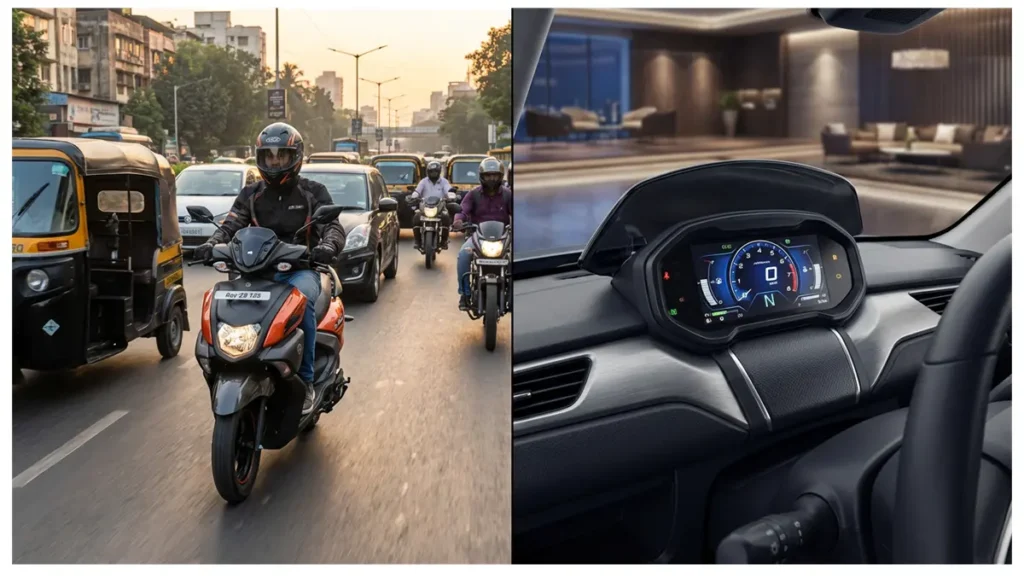
- How it works: When you accelerate from a stop (like at a traffic signal), the battery gives a little electric push to the engine. This helps overcome inertia (the heaviness of a stopped bike) so the petrol engine doesn’t have to work as hard.
- The Result: It saves fuel and gives you a “peppy” start.
- 2025 Update: Yamaha has introduced an “Enhanced Power Assist” which claims to give even stronger acceleration on slopes and when carrying a pillion.
2. Kitna Deti Hai? (The Real Mileage Truth)
This is where the Ray ZR shines.
- On Paper: Yamaha claims a massive 71.33 kmpl (ARAI certified).
- In Reality: Real-world tests show it delivers around 50 to 55 kmpl in the city.
- Comparison: Compared to its rival, the TVS NTorq (which gives around 45-50 kmpl), the Ray ZR is definitely more fuel-efficient.
3. Why You Will Love Riding It (The Pros)
- Featherweight Champion: This scooter weighs only 99kg!. It is incredibly easy to handle in traffic.
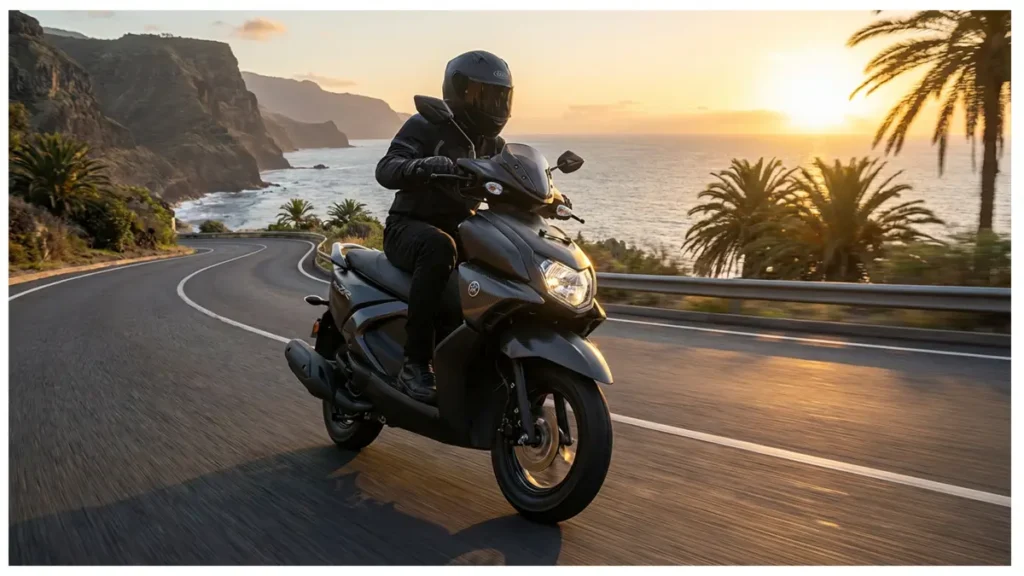
- Zip and Zoom: Because it is so light, it accelerates faster than the TVS NTorq up to 60km/h. It feels sporty and fun.
- Looks Killer: With the “Armoured Energy” design, it looks unique. The Street Rally version comes with cool knuckle guards and block-pattern tyres.
4. The “Oh No” Factor (The Cons & Horror Stories)
Before you run to the showroom, you need to hear the complaints from real owners.
- Build Quality Issues: Several users have reported that the “honeymoon phase” ends quickly. Owners have complained about rattling sounds and plastics that feel like “toys from village fairs”,. Some even faced issues where the underbelly assembly fell off.
- Stiff Ride: The suspension is firm. While this helps in handling, it can be harsh on your back on bad roads. The rear wheel is small (10-inch), which doesn’t help with potholes.
- Service Struggles: There are angry reports about Yamaha service centers failing to fix rattling noises or brake issues, with some users calling the service “atrocious”,.
5. Should You Buy the “Street Rally” Edition?
The Street Rally version looks tougher and costs more (approx. ₹85,974 ex-showroom vs ₹73k-80k for the standard).
- Is it worth it? Honestly, mechanically it is the same scooter. You are paying extra mostly for the sporty graphics, knuckle guards, and slightly different tyres. If you don’t care about the “off-road look,” save your money and buy the standard Disc variant.
Final Verdict: Buy or Bye?
- You want the best mileage in the 125cc sporty segment.
- You want a lightweight scooter that is super easy to flick through traffic.
- You love the aggressive, funky design.
- You want premium build quality (metal bodies like Activa or sturdier plastics like NTorq).
- You have a bad back (the suspension is stiff!).
- You are worried about long-term rattling issues.
Dhanush, an automobile expert with over 5 years of experience in the latest auto news and updates. Your go-to source for every development in the world of cars and bikes

Dhanush, an automobile expert with over 5 years of experience in the latest auto news and updates. Your go-to source for every development in the world of cars and bikes