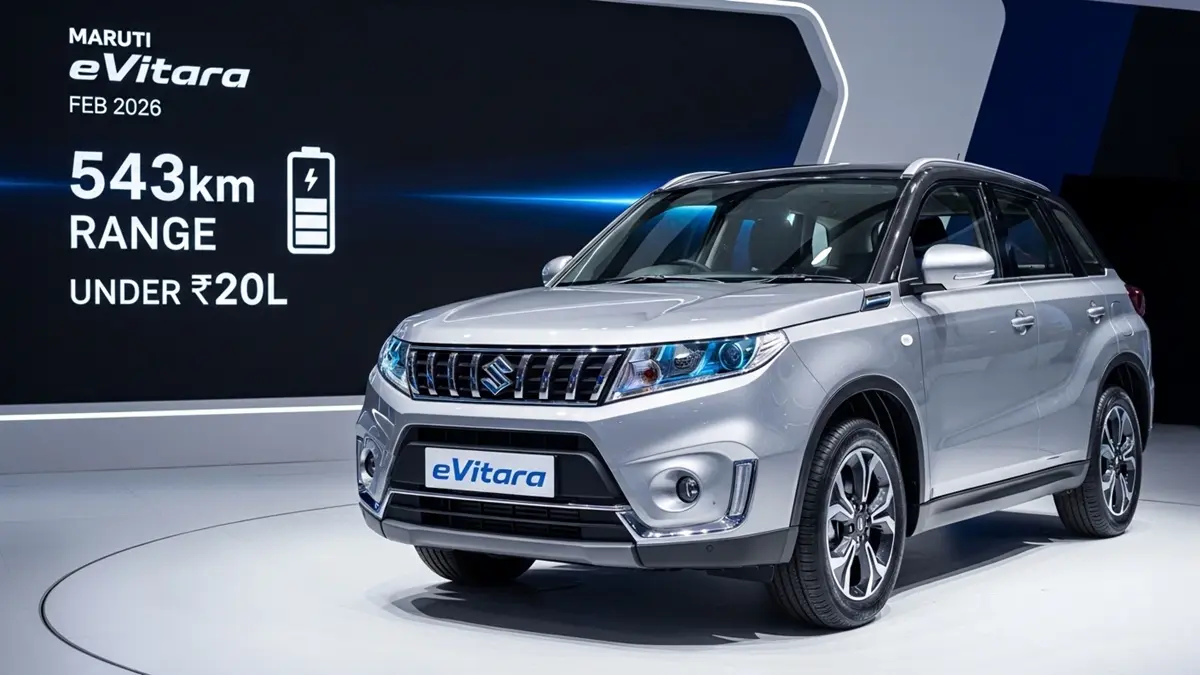
Maruti Suzuki is set to launch its first-ever electric vehicle, the eVitara, in February 2026, marking a historic moment for India’s largest car manufacturer. Expected to be priced between 17 and 25 lakh rupees ex-showroom, the electric SUV promises a segment-leading 543-kilometer ARAI-certified range with its larger 61.1 kWh battery pack option. The eVitara will compete directly with the Tata Nexon EV, Mahindra XUV400, and MG ZS EV in the rapidly growing Indian electric vehicle market.
The company has confirmed that bookings will open soon, with sales and deliveries commencing in February 2026. Maruti Suzuki is also introducing innovative ownership models including Battery-as-a-Service subscription and an assured buyback program to address buyer concerns about battery degradation and resale value.
Design and Exterior Highlights of Maruti eVitara
The eVitara showcases Maruti Suzuki’s new electric vehicle design language with a bold and modern appearance. The SUV measures approximately 4275mm in length, 1800mm in width, and 1635mm in height, positioning it as a compact SUV suitable for Indian urban environments. The wheelbase of 2700mm ensures adequate cabin space for passengers and luggage.
The front fascia features a closed-off grille design typical of electric vehicles, flanked by sleek LED headlamps with integrated daytime running lamps. The bumper incorporates aerodynamic elements and LED fog lamps, while the charging port is conveniently located on the front fender. Body cladding and roof rails add to the SUV character, and the eVitara rides on stylish alloy wheels ranging from 17 to 18 inches depending on the variant.
At the rear, connected LED tail lamps create a distinctive nighttime signature, while the tailgate design emphasizes width and stability. Maruti Suzuki offers multiple color options including solid and dual-tone combinations to appeal to diverse buyer preferences. The ground clearance is expected to be around 180-190mm, adequate for Indian road conditions.

Interior Features and Technology Package
The cabin of the eVitara features a modern and minimalist design with a focus on technology and comfort. A large touchscreen infotainment system, likely measuring 10.25 or 12.3 inches, dominates the dashboard and runs Maruti’s latest Suzuki Connect system with wireless Apple CarPlay and Android Auto. The digital instrument cluster provides all essential driving information including battery status, range estimation, and energy consumption.
Premium features include automatic climate control, a panoramic electric sunroof, ventilated front seats, and ambient lighting. The steering wheel incorporates controls for audio, phone, and cruise control functions. Wireless smartphone charging, multiple USB ports, and a premium audio system enhance the in-cabin experience. The seats use high-quality upholstery with supportive bolstering for long-distance comfort.
Safety technology receives significant attention with Level 2 Advanced Driver Assistance Systems expected on higher variants. This includes adaptive cruise control, lane keep assist, automatic emergency braking, and blind spot monitoring. A 360-degree camera system aids parking and maneuvering, while six airbags, electronic stability program, and hill hold assist come standard across all variants.
Battery, Range, and Charging Specifications
The Maruti eVitara will be offered with two battery pack options to cater to different buyer needs and budgets. The base variant features a 49 kWh battery pack, while the top variants get a larger 61.1 kWh pack. The smaller battery is expected to deliver around 400-420 kilometers of ARAI-certified range, while the larger pack achieves the impressive 543-kilometer figure.

The electric motor produces approximately 144 horsepower in the base variant and potentially higher output in the top variant. Torque delivery is instant as typical with electric motors, providing brisk acceleration from standstill. The 0-100 km/h sprint is expected to take around 9-10 seconds, adequate for city and highway driving. Real-world range will typically be 70-80 percent of ARAI figures depending on driving style, terrain, and climate control usage.
Charging capabilities include DC fast charging support allowing 10-80 percent charge in approximately 45-50 minutes using a 50 kW charger. Home charging via AC wallbox takes around 8-10 hours for a full charge depending on battery size. Maruti Suzuki is working with charging infrastructure providers to ensure adequate public charging availability for eVitara owners across major cities and highways.
Expected Price and Variant Structure
The Maruti eVitara is expected to be priced between 17 and 25 lakh rupees ex-showroom, positioning it competitively in the electric SUV segment. The base Delta variant with the 49 kWh battery may start around 17-18 lakh rupees, while the mid-spec Zeta variant could be priced at 20-21 lakh rupees. The top-end Alpha variant with the 61.1 kWh battery and all features may reach 24-25 lakh rupees.
This pricing strategy undercuts several competitors while offering comparable or superior range and features. The Battery-as-a-Service model may allow buyers to purchase the vehicle at a lower upfront cost by subscribing to the battery separately, though monthly subscription charges will apply. The assured buyback program provides exit flexibility for buyers concerned about long-term ownership.

Maruti Suzuki’s extensive service network of over 4000 touchpoints across India gives the eVitara a significant advantage over competitors. Parts availability, service quality, and brand trust are key factors that could drive eVitara sales despite being Maruti’s first electric vehicle. Financing options through Maruti Suzuki Finance will make the eVitara accessible through manageable EMI structures.
Competition in the Electric SUV Segment
The eVitara enters a competitive segment dominated by the Tata Nexon EV, which currently leads with over 70 percent market share in passenger electric vehicles. The Nexon EV, priced between 14.49 and 17.19 lakh rupees, offers 465 kilometers of range with its 40.5 kWh battery. The Mahindra XUV400, starting at 15.49 lakh rupees, provides 456 kilometers of range with similar battery capacity.
The MG ZS EV, priced between 18.98 and 25.88 lakh rupees, offers 461 kilometers of range and positions itself as a premium option. The upcoming Hyundai Creta EV and Tata Curvv EV will also compete in this segment. The eVitara’s advantages include Maruti’s brand reputation, extensive service network, competitive pricing, and segment-leading range with the larger battery option.
Frequently Asked Questions About Maruti eVitara
What is the expected launch date and price of Maruti eVitara?
The Maruti eVitara is expected to launch in February 2026 with bookings opening soon. The price is estimated to range from 17 to 25 lakh rupees ex-showroom depending on variant and battery option. The base Delta variant with 49 kWh battery may start around 17-18 lakh rupees, while the top Alpha variant with 61.1 kWh battery could reach 24-25 lakh rupees. Official pricing will be announced at the launch event.

What is the driving range of Maruti eVitara?
The Maruti eVitara offers two battery options with different ranges. The 49 kWh battery pack delivers approximately 400-420 kilometers of ARAI-certified range, while the larger 61.1 kWh pack achieves 543 kilometers. Real-world range typically ranges from 70-80 percent of ARAI figures, meaning 280-340 kilometers for the smaller battery and 380-435 kilometers for the larger pack in mixed driving conditions.
How long does it take to charge the eVitara battery?
The eVitara supports DC fast charging, allowing 10-80 percent charge in approximately 45-50 minutes using a 50 kW fast charger. Home charging via AC wallbox takes around 8-10 hours for a full charge depending on battery size and charger capacity. Maruti Suzuki will provide home charging installation support and is working with public charging networks to ensure adequate infrastructure availability.
What is Battery-as-a-Service and how does it work?
Battery-as-a-Service is an innovative ownership model where buyers can purchase the eVitara at a lower upfront cost by subscribing to the battery separately. Instead of owning the battery, customers pay a monthly subscription fee based on usage. This reduces the initial purchase price significantly and eliminates concerns about battery degradation and replacement costs. The subscription includes battery maintenance and replacement if needed.
Important Official Links and Resources
Maruti Suzuki eVitara Official Page

Dhanush, an automobile expert with over 5 years of experience in the latest auto news and updates. Your go-to source for every development in the world of cars and bikes