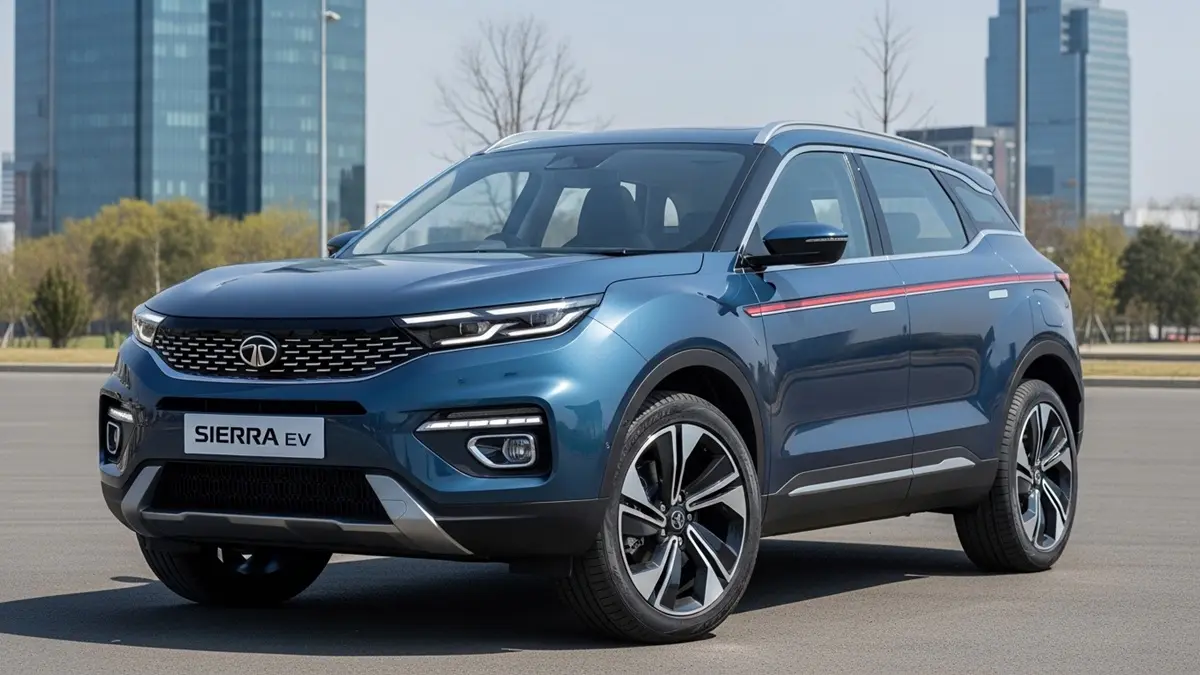
Let’s be honest — the Tata Sierra name carries serious weight. For a generation that grew up in the 90s, that boxy silhouette with the wraparound glass was a poster car. Fast forward to 2026: the ICE Sierra crossed 20,000 units in just four months [citation:3], and waiting periods in cities like Lucknow stretched to two months. Now, Tata is preparing the real deal: the Sierra EV.
I’ve driven the Harrier EV test mules, lived with the Curvv EV, and watched the Indian EV scene evolve from hesitant to hungry. But does the Sierra EV deliver more than just nostalgia? Let’s talk potholes, real-world range, triple screens, and whether it can truly challenge the Mahindra BE6 and Hyundai Creta Electric on our broken, beautiful roads.
Design: Retro Soul, Modern Muscle
The Sierra EV doesn’t scream “look at me” like some rivals. Instead, it whispers heritage with a punch. The upright stance, flat bonnet, and those iconic blacked-out rear pillars are all present — but they’ve been smoothed out for the electric age [citation:1]. Up front, you get a closed-off grille (EV signature) with a full-width LED light bar that makes it look wide and planted. The flush door handles and aero-optimised 19-inch alloys reduce drag, but more importantly, they make the SUV feel premium.
What I love? The rear glass — that panoramic wrap-around design — is still there. It’s one of those rare cues that connects generations. On Indian roads, the Sierra EV’s 190-205mm ground clearance [citation:7] should handle most speed breakers, though the battery pack sits underneath, so you’ll want to be careful on sharp inclines. The chunky body cladding is functional: it shrugs off gravel and minor scratches from tight parking.
Performance & Battery: Two Powertrains, Real-World Focus
Tata hasn’t officially confirmed all numbers, but multiple sources point to two battery packs borrowed from the Harrier EV and Curvv EV [citation:4][citation:9]. Here’s what to expect:
- 55kWh LFP pack (RWD): ~167 bhp, 215 Nm torque, claimed range around 500 km (MIDC). Real-world mixed driving: 380-420 km. Good for daily commutes and weekend trips if you have home charging.
- 65kWh pack (RWD): ~238 bhp, 315 Nm, claimed range 538 km (MIDC). Expect ~450-480 km in real-world Indian traffic (Delhi-Jaipur or Mumbai-Pune highways) [citation:4].
- 75kWh pack (AWD, possible): Rumoured for later. Could push range to 620 km+ [citation:9][citation:10].
Acceleration? The 65kWh RWD variant should hit 0-100 km/h in around 6.3-6.5 seconds [citation:4]. That’s quicker than the Creta Electric but slightly behind the Mahindra BE6’s top variant. The big news: AWD will be available from launch [citation:2][citation:4]. That means two motors, instant torque vectoring, and genuine capability on slushy hill roads or loose gravel. For families who travel to hill stations or live in areas with unpredictable weather, this is a strong selling point.

Charging: DC fast charging up to 150kW (10-80% in ~35 minutes). V2L and V2V are included — you can power a camping fridge or rescue a friend’s Nexon EV [citation:1][citation:9].
Comfort & Cabin: Triple Screens and Lounge Vibes
Step inside, and the first thing you notice is how airy it feels. The dedicated EV platform means a flat floor, no transmission tunnel eating into rear legroom. Tata’s going all-in on tech: expect a triple-screen layout — a 12.3-inch digital cluster, a 12.3-inch central infotainment, and a passenger-side screen for OTT or navigation duties [citation:1][citation:5]. The dashboard is minimal but not boring; soft-touch materials, dual-tone finishes, and an illuminated Tata logo on the steering wheel add flair.
Seats? Ventilated front seats (top variants), and the rear bench is genuinely spacious. I’m 5’11”, and with the front seat adjusted to my driving position, I had more than a fistful of knee room. The panoramic sunroof (yes, it’s there) floods the cabin with light, making it feel even larger [citation:5][citation:9].
Boot space: roughly 480-500 litres with all seats up, and folding the rear seats opens up a van-like cavern. No frunk confirmed yet, but the underfloor storage is decent.
Real-world practicality note: The rear doors open wide (almost 80 degrees), which is a blessing for elderly parents or loading kids in tight parking spots. Also, the door pads are scooped out to hold 1-litre bottles — small details that matter during a Mumbai summer.
Safety Features: Level 2 ADAS, 6 Airbags Standard
Tata doesn’t mess with safety. The Sierra EV is expected to come with Level 2 ADAS (adaptive cruise control, lane keep assist, autonomous emergency braking, blind-spot monitoring) on higher variants [citation:1][citation:5]. Standard safety includes 6 airbags, ESP, hill hold, ISOFIX, and a 360-degree camera with decent resolution.
There’s also a tyre pressure monitoring system (TPMS) and electronic stability control. Will it get a 5-star Bharat NCAP rating? Given Tata’s track record (Nexon, Punch, Harrier all scored 5 stars), it’s highly likely. The acti.ev platform has a reinforced battery cradle that also improves chassis rigidity — which means better handling and less body flex on broken roads.
✅ Pros
- Real-world range: 450km+ from 65kWh pack
- AWD option available from launch (segment edge)
- Triple-screen cabin, feels premium and spacious
- Level 2 ADAS & 6 airbags as standard on most variants
- V2L & V2V charging — genuinely useful for road trips
- Heritage design without being tacky
❌ Cons
- Expected price up to ₹28 lakh (ex-showroom) for AWD top-spec
- Boot slightly smaller than ICE Sierra due to battery packaging
- Charging infra still a concern for long intercity hauls
- No 7-seater option (Safari EV will cover that)
- Firm ride on rough patches due to battery weight (yet to verify)
Price Structure (Expected)
Official pricing drops at launch, but here’s the industry consensus based on dealer chatter and competitor positioning [citation:1][citation:6][citation:8]:
- 55kWh RWD (Base) – ₹20.5 lakh – ₹22 lakh ex-showroom
- 55kWh RWD (Mid) – ₹23 lakh – ₹24 lakh
- 65kWh RWD (Top) – ₹25 lakh – ₹26.5 lakh
- 65kWh AWD (Performance) – ₹27 lakh – ₹28.5 lakh (if launched)
Tata may also introduce a Battery-as-a-Service (BaaS) option, which could slash the upfront price by ₹2-3 lakh, with a monthly subscription for the battery. Watch this space if you’re budget-conscious [citation:2].

Comparison Table: Sierra EV vs Hyundai Creta EV vs Mahindra BE 6
The mid-size electric SUV segment is heating up. Here’s how the Sierra EV stacks up against its two fiercest rivals.
| Feature | Tata Sierra EV (65kWh RWD) | Hyundai Creta Electric (51.4kWh) | Mahindra BE 6 (59kWh) |
|---|---|---|---|
| Expected Price | ₹23 – ₹26.5 lakh | ₹22 – ₹25.5 lakh | ₹24 – ₹27 lakh |
| Claimed Range (MIDC) | ~538 km | ~473 km | ~550 km |
| Real-World Range (Mixed) | 440-480 km | 380-400 km | 420-450 km |
| Power / Torque | 238 bhp / 315 Nm | 169 bhp / 255 Nm | ~228 bhp / 380 Nm |
| 0-100 km/h | ~6.5 sec | ~7.9 sec | ~6.7 sec |
| AWD Available? | Yes (from launch) | No | No (only RWD) |
| Cabin Highlight | Triple screens, JBL audio | Dual 10.25-inch screens, Bose | Large vertical screen, sporty seats |
| ADAS Level | Level 2 | Level 2 | Level 2 |
| Best For | Families wanting space + AWD + genuine range | Buyers who trust Hyundai’s service & refinement | Performance lovers who like bold, futuristic design |
Our take: The Creta Electric is smoother and backed by Hyundai’s wide service network, but it feels like a converted ICE car. The BE 6 is quicker and wilder, but the Sierra EV counters with AWD, better rear seat space, and Tata’s proven safety record. If you need all-weather confidence and a cabin that feels truly next-gen, the Sierra EV is the smarter pick.
Frequently Asked Questions (FAQ)
A: It is a fully electric SUV. Tata also sells an ICE Sierra (petrol/diesel), but the EV runs on a 55kWh or 65kWh battery with zero tailpipe emissions [citation:1][citation:3].
A: With the 65kWh pack, expect 440-480 km in mixed driving (city + highway). The 55kWh pack will deliver around 380-420 km. Figures may vary with AC usage and driving style [citation:4][citation:9].
A: Yes, Tata is expected to offer AWD from launch on higher variants, which is a significant advantage over the Creta EV and Mahindra BE6 (both RWD only) [citation:2][citation:4].

A: Expected launch date is May 19, 2026. Pre-bookings may open a few weeks before that [citation:2].
A: The base variant will cost around ₹24-25 lakh on-road, while the top-spec AWD could touch ₹32 lakh on-road depending on state taxes and RTO fees [citation:1][citation:8].
A: Yes, the production version is expected to get a panoramic sunroof on higher variants [citation:1][citation:5].