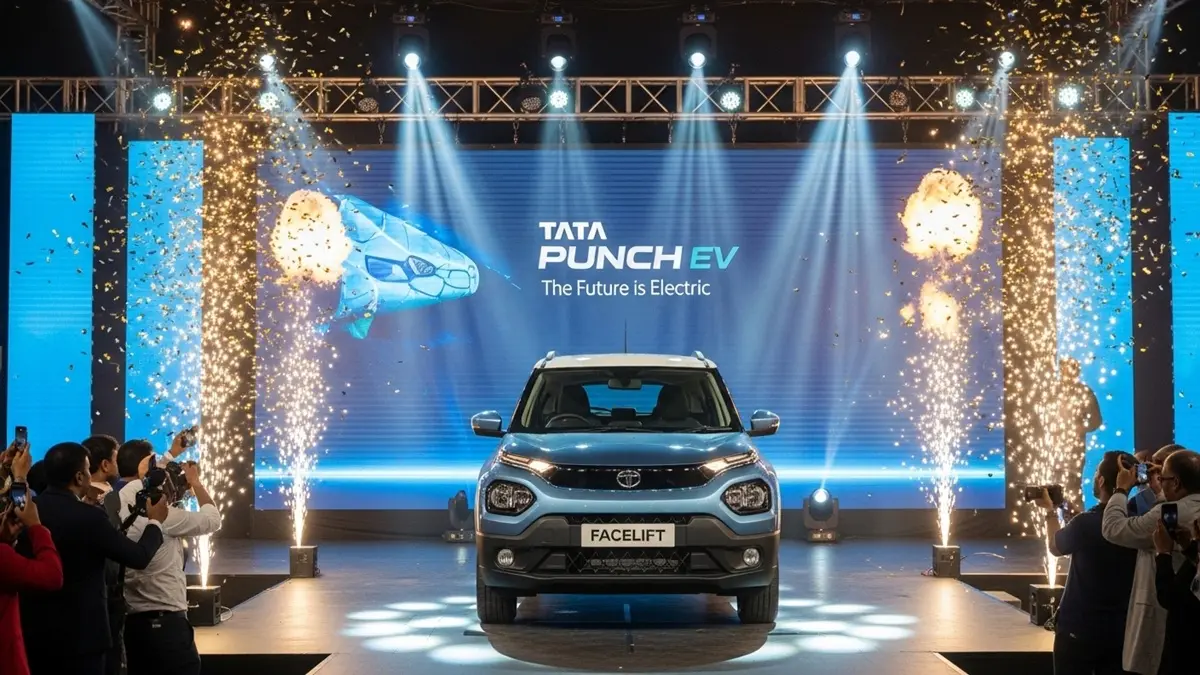
Tata Motors has officially confirmed the launch date for the highly anticipated Punch EV facelift on February 20, 2026, bringing significant upgrades to India’s most affordable electric SUV. The updated model is expected to introduce a game-changing 500-kilometer range variant, redesigned exteriors, and premium features that could redefine the budget EV segment in the Indian market.
Industry insiders suggest the introduction of a larger 45 kWh battery pack alongside the existing 25 kWh and 35 kWh options. This would push the electric micro SUV’s driving range close to the 500-kilometer mark, directly addressing range anxiety concerns among Indian EV buyers. The current top variant offers a claimed 421 kilometers, which translates to approximately 280-320 kilometers in real-world driving conditions.
What’s New in the Punch EV Facelift Design
The Punch EV facelift adopts the refreshed design language recently introduced on its petrol-powered counterpart in January 2026. The most striking transformation appears at the front fascia, featuring a more upright and muscular stance with sharper LED daytime running lamps positioned near the hood. These LED DRLs connect via a sleek black grille element, adding visual width to the compact electric SUV.
The headlamp units have been repositioned lower in the redesigned front bumper, creating a more aggressive and contemporary appearance. Additional body cladding and a prominent skid plate reinforce the SUV character, while new aerodynamically optimized alloy wheels are expected across multiple variants. The overall dimensions remain compact at 3857mm length and 1633mm height, maintaining its city-friendly proportions that Indian buyers appreciate.
Subtle updates at the rear include a revised bumper design and possibly updated LED tail lamp graphics. Tata Motors is likely to introduce fresh color options, potentially including dual-tone combinations that have gained popularity in this segment. The ground clearance, a crucial factor for Indian road conditions, is expected to remain competitive within the micro SUV category.
Premium Interior Features and Advanced Technology
The cabin receives substantial upgrades with a larger 12.3-inch free-standing touchscreen infotainment system replacing the current setup. This new display will feature improved graphics, faster processing power, and enhanced connectivity options including wireless Android Auto and Apple CarPlay. The instrument cluster also gets a new 7-inch digital display, providing better visibility for critical information like battery status, range estimation, regenerative braking levels, and driving modes.

Interior ambiance improves through a new dual-tone color scheme with light blue and charcoal tones, paired with a redesigned dashboard featuring white inserts borrowed from the current Punch EV design language. The seats may receive improved bolstering for better lateral support during longer drives and spirited cornering. A panoramic sunroof, highly desired in the Indian automobile market, is rumored for higher variants along with a premium Harman Kardon audio system.
Safety technology takes a significant leap forward with the possible introduction of Level 2 Advanced Driver Assistance Systems. This could include adaptive cruise control, lane keep assist, automatic emergency braking, and blind spot monitoring features. A 360-degree camera system with blind view monitor is almost certain, given the ICE Punch facelift already offers this feature. Six airbags are expected as standard across all variants, reinforcing Tata Motors’ commitment to vehicle safety.
Battery, Range, and Charging Specifications
The Punch EV facelift will continue with the dual-battery architecture offering 25 kWh and 35 kWh battery packs. However, the potential introduction of a 45 kWh battery pack similar to the Tata Nexon EV would be game-changing for the segment. The current 35 kWh variant delivers 421 kilometers claimed range with a 90 kW electric motor producing 122 horsepower and 190 Nm torque output.
If the larger battery pack materializes, it could come with enhanced power output, potentially reaching 145 horsepower as some industry reports suggest. This would significantly improve overtaking confidence on highways and overall performance when the vehicle is fully loaded with passengers and luggage. The 0-100 km/h acceleration sprint currently takes around 9.5 seconds, which is adequate for both city commuting and highway cruising.
Charging capabilities remain competitive with DC fast charging allowing 10-80 percent charge in approximately 56 minutes for the 35 kWh battery using a 50 kW fast charger. Home charging via 7.2 kW AC wallbox takes around 9.4 hours for complete charging. The regenerative braking system with multiple adjustable modes helps maximize driving range by recovering kinetic energy during deceleration and braking.

Real-world efficiency typically delivers 280-320 kilometers for the 35 kWh variant in mixed driving conditions with moderate air conditioning usage. The potential 45 kWh battery pack could push real-world range to 380-420 kilometers, making weekend getaways and inter-city travel genuinely viable without range anxiety or frequent charging stops.
Expected Price and Variant Lineup
The current Tata Punch EV price ranges from 9.99 lakh to 14.44 lakh rupees ex-showroom across multiple variants including Smart, Adventure, Empowered Plus, and Creative trims. With the facelift update, expect a marginal price increase of 30,000 to 50,000 rupees to account for additional features, design updates, and improved technology.
If the 45 kWh battery pack is introduced, it would likely command a premium of 1.5 to 2 lakh rupees over the current top variant, potentially pushing the range-topping model to around 16 lakh rupees ex-showroom. This pricing strategy would still position the Punch EV as one of the most affordable electric SUVs in India, undercutting several competitors significantly.
The entry-level 25 kWh variant should remain competitively priced to attract first-time EV buyers and those with limited daily driving requirements. Mid-range 35 kWh variants would target buyers seeking a balance between driving range and affordability. The potential long-range variant would cater to enthusiasts and buyers requiring maximum range for their daily usage patterns and occasional long-distance travel.
Tata Motors may introduce special edition variants or exclusive color packages to generate additional market interest. Financing options through Tata Motors Finance and partnerships with leading banks are expected to make the Punch EV facelift accessible through manageable EMI structures, potentially starting around 15,000 to 18,000 rupees per month depending on down payment amount and loan tenure.

Competition and Market Positioning
The Punch EV facelift competes in the affordable electric micro SUV segment where direct competition remains limited but growing. The MG Comet EV, priced between 6.99 and 9.40 lakh rupees, offers a more compact package with lower range but also lower pricing. The Citroen eC3, positioned between 11.50 and 12.35 lakh rupees, provides similar range with a conventional hatchback body style.
The upcoming Maruti Suzuki eVitara, expected to launch in early 2026 with pricing between 17 and 25 lakh rupees, will compete in a higher segment but may attract buyers considering the top-end Punch EV variants. Within Tata Motors’ own electric vehicle lineup, the Punch EV sits below the Nexon EV which starts at 14.49 lakh rupees, ensuring clear differentiation and minimal cannibalization between the two models.
Tata Motors currently commands over 70 percent market share in passenger electric vehicles in India. The extensive service network, proven reliability track record, and strong brand trust give the Punch EV a significant advantage over newer market entrants. The facelift aims to maintain this leadership position by addressing feature gaps and potentially extending driving range to match evolving buyer expectations.
Frequently Asked Questions About Tata Punch EV Facelift
What is the expected launch price of Tata Punch EV facelift in India?
The Punch EV facelift is expected to be priced between 10.30 lakh and 16 lakh rupees ex-showroom depending on variant and battery pack option. Base variants with 25 kWh battery may start around 10.30 lakh rupees while the potential 45 kWh long-range variant could reach 16 lakh rupees. Final pricing will be officially announced on February 20, 2026.
What is the real-world driving range of Punch EV?
The current 35 kWh variant delivers approximately 280-320 kilometers in real-world conditions with mixed city and highway driving and moderate air conditioning use. The 25 kWh variant typically provides 220-250 kilometers. If the rumored 45 kWh battery pack is introduced, real-world range could extend to 380-420 kilometers, making it suitable for longer journeys.

Will the Punch EV facelift get ADAS safety features?
There is strong speculation about Level 2 ADAS features including adaptive cruise control, lane keep assist, and automatic emergency braking. A 360-degree camera with blind view monitor is almost certain. Six airbags are expected as standard across all variants. Official confirmation regarding ADAS features will come at the February 20 launch event.
How long does it take to charge the Punch EV battery?
Using a 50 kW DC fast charger, the 35 kWh battery charges from 10 to 80 percent in approximately 56 minutes. Home charging with a 7.2 kW AC wallbox takes around 9.4 hours for full charge. The 25 kWh variant charges faster at 38 minutes for DC fast charging and 6.5 hours for AC home charging.
Important Official Links and Resources
Tata Punch EV Official Product Page
Tata EV Range and Specifications

Dhanush, an automobile expert with over 5 years of experience in the latest auto news and updates. Your go-to source for every development in the world of cars and bikes